

Benefits of Honey: Raw Honey Health Guide 2026
What Makes Honey a Bioactive Food
Honey is a bioactive food because it contains natural enzymes, antioxidants and antibacterial compounds that remain active in the jar rather than being broken down by heat. The benefits of honey, in other words, come from what the bees put in, not from what a factory adds later.
That distinction matters more than most people realise.
Supermarket honey is often heated and finely filtered so it pours cleanly and stays runny for years. Raw honey is different. At The Rare Honey Company, we bottle honey cold filtered and unprocessed so those natural compounds stay intact. The result is a product that behaves less like a sweetener and more like a functional food.
Below, we break down what the evidence actually supports, what it doesn't, and how to use raw honey properly.
Raw Honey vs Pasteurised Honey: What Changes in the Jar
The core difference between raw honey and pasteurised honey is heat. Raw honey is never heated above hive temperature; pasteurised honey is heated and fine-filtered, which makes it clearer and slower to crystallise but removes much of its pollen and some heat-sensitive enzymes.
So when people ask whether raw honey vs pasteurised honey actually matters, the honest answer is yes, and here is why.
Feature |
Raw Honey |
Pasteurised Honey |
|---|---|---|
Heat treatment |
None |
Heated to high temperatures |
Natural enzymes |
Retained |
Largely destroyed |
Pollen content |
Present |
Filtered out |
Texture |
Crystallises over time |
Stays runny |
Flavour |
Complex, varies by source |
Uniform, mild |
Why Heat Treatment Alters Honey's Natural Compounds
Heat is the single biggest variable in honey quality. Enzymes such as glucose oxidase, which supports honey's natural antibacterial activity, are sensitive to temperature and degrade when honey is pasteurised.
Fine filtration removes pollen and other microscopic particles along with them. That pollen is one of the clearest markers of a honey's origin, which is why raw, traceable honey is easier to verify than a blended supermarket jar. Cold filtering, by contrast, removes only physical debris such as wax while leaving the bioactive content alone.
Antioxidants and Daily Immune Support
Raw honey supplies polyphenols and flavonoids, two families of antioxidants that help the body manage oxidative stress. Darker honeys generally carry higher antioxidant levels than pale ones, which is one reason varietal honey is worth seeking out (pubmed.ncbi.nlm.nih.gov).
Antioxidants do not "boost" immunity in the marketing sense. What they support is normal immune function by limiting the damage caused by unstable molecules. Many people find that a daily spoonful of raw honey fits easily into an otherwise balanced diet, though honey is still a sugar and should be treated as one so. moderation is the key.
The benefits of honey for immune support are best understood as supportive rather than medicinal. It is a genuinely useful food, not a substitute for medical care.
Honey for Sore Throats and Coughs: What the Evidence Shows
Honey is a well-established home remedy for sore throats and coughs, and it is one of the few traditional treatments that official health guidance still endorses. UK health bodies recognise honey as a suitable first-line option for short-term cough relief in adults and children over one year old.
Why it works comes down to a combination of factors: honey coats and soothes irritated throat tissue, its natural antibacterial activity may help limit irritation, and its viscosity helps calm the cough reflex.
A few practical points:
- Take it straight from the spoon or stirred into warm, not boiling, water
- Lemon and honey in warm water is a classic for good reason
- Do not give honey to infants under 12 months old (the NHS)
- If a cough persists beyond a few weeks, see a GP
For everyday throat comfort, raw honey is the better choice because the compounds doing the work have not been heated away.
How to Use Raw Honey for Wellness Every Day
Using raw honey for wellness comes down to consistency and restraint: a spoonful or two a day, added to food or drink that is not scalding hot, is enough for most people. The goal is a small daily habit, not a large one.
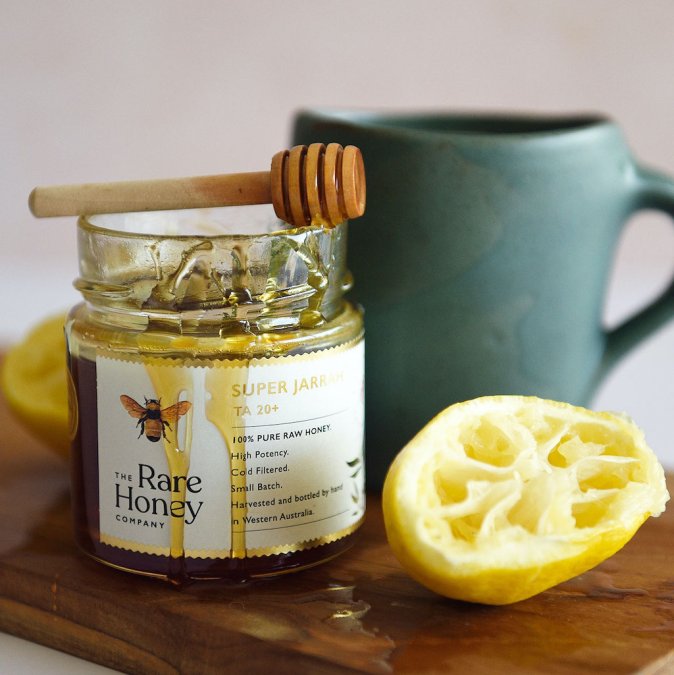
A jar of raw honey on a wooden kitchen counter with a spoon, a cup of herbal tea, and fresh lemon nearby in soft morning light
Simple Ways to Add Raw Honey to Your Routine
- Stir a teaspoon into warm water with lemon first thing in the morning
- Drizzle over porridge, yoghurt or overnight oats instead of refined sugar
- Whisk into salad dressings for a natural sweetness that balances acidity
- Add to marinades and glazes where its flavour can carry a dish
- Take a spoonful neat when your throat feels scratchy
Keep the jar somewhere cool and dark, and always use a clean, dry spoon. Moisture is what spoils honey, not time.
Types of Honey and What Sets Bioactive Varieties Apart
Bioactive honey is honey with a measured level of natural antibacterial activity, verified through laboratory testing rather than marketing claims. The benefits of honey vary considerably by source, because the plants the bees visit determine what ends up in the jar.
Single-origin, varietal honeys from pristine native forests tend to show higher activity than blended supermarket products, which are often mixed from multiple sources to hit a consistent colour and price. That is why certification matters.
At The Rare Honey Company, our honeys are chemist certified with a minimum 10+ Total Activity rating, harvested from native forests in South Western Australia and bottled by hand at source. Total Activity is a laboratory measure of the honey's natural antibacterial strength, not a flavour score. If you have ever wondered how to judge whether a premium jar is worth it, that certification is the answer: it is an independent number rather than a claim on a label.
Who Should Be Careful With Honey
Honey is not suitable for everyone. The main groups who need to take care are infants under 12 months old, people managing blood sugar conditions, and anyone with a diagnosed allergy to bee products.
- Infants under 12 months: honey can contain spores that a baby's digestive system cannot safely handle. This is a firm rule, not a cautious one.
- Diabetes and blood sugar conditions: honey is still a sugar and affects blood glucose. Treat it as you would any other sweetener and follow your clinician's advice.
- Bee product allergies: if you react to pollen or bee venom, introduce honey cautiously.
- Dental health: like all sugary foods, honey contributes to tooth decay when eaten frequently.
If you have a sensitive stomach, start with a small amount and see how you respond. Raw honey is generally well tolerated, but individual reactions vary and a spoonful a day is a sensible starting point.
Most people never think about what happens to honey between the hive and the jar, and that gap is exactly where the benefits of honey are lost. Heat, fine filtration and blending strip out the compounds that make raw honey worth eating in the first place. The Rare Honey Company exists to close that gap: 100% pure, raw and unprocessed honey, cold filtered to protect its natural enzymes, sourced from pristine native forests in South Western Australia, and chemist certified with a minimum 10+ Total Activity rating. Every batch is small, bottled by hand at source by a family team, and traceable back to the forest it came from. Get started with The Rare Honey Company and taste what honey is supposed to be.
Frequently Asked Questions
What are the primary health benefits of raw honey?
Raw honey provides antioxidants that help protect cells from damage, supports immune function, and soothes sore throats and coughs. Unlike heavily processed honey, raw varieties retain natural enzymes, pollen, and beneficial compounds that heat treatment can destroy. A daily spoonful stirred into tea or drizzled over porridge offers a simple way to add these benefits to your routine without relying on refined sugar.
How does bioactive honey differ from standard supermarket honey?
Bioactive honey is tested and rated for its natural activity levels, often shown as a Total Activity rating. Supermarket honey is typically pasteurised and blended from multiple sources, which strips out many of the compounds that give raw honey its properties. Bioactive varieties like those from The Rare Honey Company are cold filtered and chemist certified, so you know exactly what you are getting in each jar.
Is raw honey safe for everyone?
Raw honey is safe for most adults and children over one year old. It should never be given to infants under twelve months because of the risk of infant botulism. If you have a weakened immune system, are pregnant, or manage a condition like IBS, speak to your GP before making it a daily habit, as raw honey affects everyone differently.
Can honey help with seasonal allergies or sore throats?
Honey has been used for sore throats and coughs for centuries, and research supports its soothing effect on irritated throats. A spoonful taken directly or stirred into warm water with lemon can ease discomfort. For seasonal allergies, local raw honey containing trace pollen is sometimes suggested, though evidence is mixed. Raw honey for sore throats and coughs remains one of its most trusted traditional uses.