

How to Identify Raw Unheated Honey: 5 Simple Tests
Last Updated: 18 September 2026
How to Identify Raw Unheated Honey: Visual and Sensory Checks
Identifying raw unheated honey starts with your senses, not a lab.
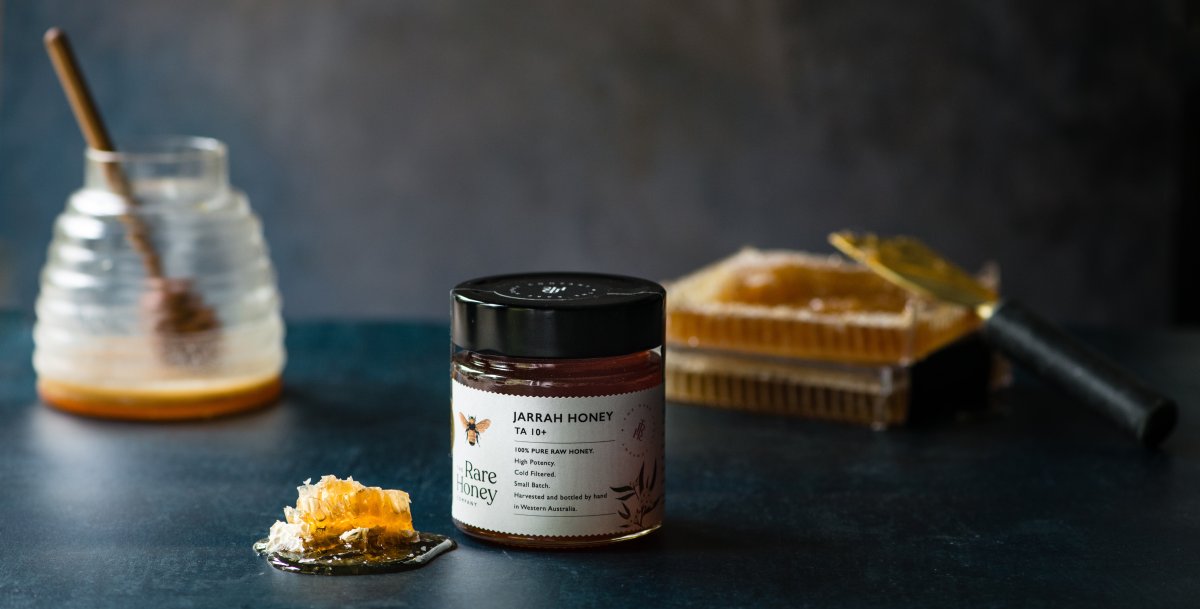
Jarrah Honey TA10+ with honeycomb cassette and glass jar with honey stirrer in background.
UK honey labelling and food information guidance
Raw Honey vs Pasteurised Honey: What Changes in the Jar
The clearest difference between raw honey and pasteurised honey is heat: pasteurisation stops honey setting and extends shelf life, stripping out pollen and aroma.
Honey Crystallisation Process: Why It Signals Raw Honey
Crystallisation is not a fault. It is proof that your honey is raw.
How to Read Honey Labels
Labels are where most shoppers get caught out. Trust jars listing "raw", "unpasteurised", "unfiltered", a named origin, a batch or harvest date, and a tested activity rating; if none appear, treat it as a blend.
Quick Checklist: Spotting Raw Unheated Honey
- Label says raw, unpasteurised and unfiltered
- Origin is named, not just a country
- Batch or harvest date is present
- Honey is cloudy or uneven in colour
- Smells floral or woody, not just sweet
- Tastes layered, with a slight throat tingle
- Sets over time rather than staying glass-clear
- Activity rating is stated and tested
Score six or more and you likely hold genuine raw honey.
Judging raw honey by clarity alone is the mistake most shoppers make. Real raw honey is uneven, aromatic and slow to pour, and it sets in time. The Rare Honey Company bottles small batches of chemist-certified raw honey, cold-extracted and unfiltered, with a 10+ Total Activity rating on every jar. Get started with The Rare Honey Company and taste the difference raw makes.