

Raw Honey in Savoury Recipes: Benefits & Pairings
Table of Contents
- Why Raw Honey Works in Savoury Cooking
- The Flavour Science Behind Raw Honey
- Best Savoury Honey Pairings for Different Dishes
- Cooking with Raw Honey: Essential Tips
- Raw Honey vs Processed Honey in Cooking
- Savoury Recipes That Showcase Raw Honey
- Frequently Asked Questions
Last Updated: 21 September 2026
Why Raw Honey Works in Savoury Cooking
Raw honey savoury recipes bridge the gap between sweetness and complexity in ways processed alternatives simply cannot. The difference lies in what remains unheated and unfiltered: enzymes, pollen, and trace minerals that add depth to savoury dishes without tasting like dessert.
Most cooks assume honey belongs only in sweet applications. That assumption costs them. When raw honey meets salt, acid, and umami-rich ingredients, it doesn't compete, it amplifies. A drizzle over roasted vegetables doesn't make them sugary; it adds a subtle caramelised undertone that makes the vegetables taste more like themselves. The same principle applies to glazes, dressings, and marinades.
Raw, unprocessed honey from Western Australia retains the full spectrum of bioactive compounds that give it character. These aren't marketing claims, they're the difference between honey that tastes like sweetener and honey that tastes like something worth tasting.
The Flavour Science Behind Raw Honey
Raw honey in savoury recipes works because of what it contains, not just what it tastes like. Unheated honey retains hundreds of flavour compounds that processing destroys. These compounds interact with heat, acid, and salt in predictable ways that enhance rather than dominate.
When honey is heated during cooking, its simple sugars caramelise. This creates depth, a toasted, almost savoury quality that processed honey cannot achieve because those enzymes and trace compounds are already gone. Think of it as the difference between caramel made from sugar and caramel made from honey. One is flat sweetness; the other has layers.
Enzymatic activity in raw honey also matters. These enzymes break down complex carbohydrates and proteins in foods, making flavours more pronounced. A glaze with raw honey on duck doesn't just coat the meat, it begins a subtle transformation of the surface, creating a more complex taste experience.
Raw honey's mineral content, particularly potassium, magnesium, and trace elements, adds a subtle mineral note that balances acidity in vinaigrettes or cuts through richness in meat dishes. This is why raw honey pairs so naturally with aged balsamic, sharp cheeses, and cured meats. The minerals create harmony where sweetness alone would clash.
Best Savoury Honey Pairings for Different Dishes
The best savoury honey pairings follow a simple rule: match the honey's flavour profile to the dish's dominant flavour. A lightly smoked honey suits game; a darker, more complex honey suits rich, fatty meats; a floral honey brightens vegetable dishes.
With roasted and grilled meats: Duck, pork, and beef benefit from darker, more complex raw honeys. The Rare Honey Company's Blackbutt honey, with its dark rich sweetness and toasted caramel finish, complements the charred exterior of roasted duck. Brush it on during the final minutes of cooking so it caramelises without burning. For pork, a lighter approach works, a honey-based glaze with mustard and thyme lets the meat's flavour remain central.

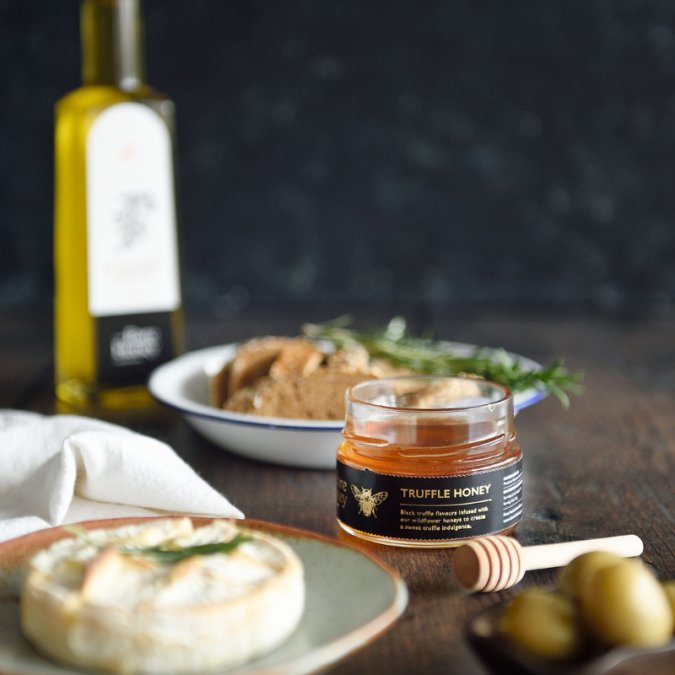
With aged cheeses and charcuterie: Raw honey's mineral notes make it exceptional alongside hard cheeses and cured meats. The Black Truffle Honey pairs beautifully with aged Comté or Manchego, the earthy truffle notes creating an unexpected bridge between sweet and savoury. On a cheese board, it's not decoration, it's a flavour component that changes how each cheese tastes.
With roasted vegetables: Root vegetables especially benefit from a light honey glaze. Carrots, parsnips, and beetroot gain complexity when finished with raw honey in the final stages of roasting. The honey caramelises on the vegetable's surface, creating a subtle sweetness that enhances rather than masks the vegetable's natural flavour.
With vinaigrettes and dressings: A teaspoon of raw honey in a vinaigrette transforms it. The honey doesn't dissolve completely, it creates pockets of sweetness that balance sharp vinegars and oils. This works especially well with red wine vinegar or sherry vinegar, where the honey's complexity matches the vinegar's depth.
Cooking with Raw Honey: Essential Tips
Cooking with raw honey savoury recipes requires different handling than processed honey. Raw honey crystallises more readily, burns more easily, and performs differently depending on when it's added to a dish.
Temperature control is critical. Raw honey contains heat-sensitive enzymes and compounds. If you're adding honey for its bioactive properties, add it after cooking or at the very end of heating. If you're using it as a glaze or for caramelisation, brush it on during the final minutes so it browns without destroying its flavour compounds. This distinction matters because raw honey's value lies partly in what survives the cooking process.
Crystallisation isn't a flaw, it's normal. Raw honey crystallises over time, especially in cool kitchens. Warm the jar gently in hot water if needed, but never microwave it. Microwaving destroys the very compounds that make raw honey worth using. A gentle warm water bath takes five minutes and preserves the honey's integrity.
Measure by weight, not volume. Honey's viscosity changes with temperature. A tablespoon in winter weighs more than a tablespoon in summer. For consistent results, especially in glazes and dressings, weigh your honey. This also prevents over-sweetening, which is the most common mistake in savoury cooking.
Balance is everything. Raw honey in savoury recipes works best when another flavour element cuts through it. Acid (vinegar, lemon juice, wine) is your ally. Salt amplifies honey's complexity rather than fighting it. Spice, especially black pepper, chilli, or smoked paprika, creates contrast. Without these elements, honey becomes cloying.
Cooking Method |
Best Honey Type |
Timing |
Result |
|---|---|---|---|
Glazing roasted meat |
Dark, complex (Blackbutt TA30+) |
Final 5-10 minutes |
Caramelised, glossy exterior |
Vinaigrette |
Any raw honey |
Mixed cold, before serving |
Balanced sweetness, complex depth |
Cheese board |
Distinctive profile (Black Truffle) |
Room temperature |
Flavour bridge between cheese and honey |
Finishing raw vegetables |
Light to medium (Redgum TA10+) |
Last 2-3 minutes of roasting |
Subtle sweetness, caramelised edges |
Raw Honey vs Processed Honey in Cooking
The difference between raw honey and processed honey in savoury recipes isn't subtle, it's fundamental. Processed honey has been heated, filtered, and often blended. This extends shelf life and creates a consistent product, but it removes the compounds that make raw honey worth using in the first place.

Processed honey contains no enzymes. These enzymes, present in raw honey, begin breaking down proteins and carbohydrates the moment honey contacts food. This subtle transformation is why raw honey glazes taste more complex than processed honey glazes. The processed version sits on top of food; the raw version begins interacting with it.
Raw honey retains pollen and trace minerals. Processed honey removes these through fine filtration. In sweet applications, this barely matters. In savoury cooking, these elements create the mineral undertone that balances acid and richness. A processed honey glaze tastes like sweetness applied to meat. A raw honey glaze tastes like the meat itself has become more flavourful.
The Rare Honey Company's commitment to keeping honey raw and unfiltered means every jar retains these properties.
Cost reflects this difference. Raw honey costs more because it requires more careful handling and no heat processing. For savoury cooking specifically, this investment returns value because you use less of it.
Savoury Recipes That Showcase Raw Honey
The best way to understand raw honey in savoury cooking is to taste it in practice. These recipes demonstrate how raw honey transforms different categories of savoury dishes.
Honey-glazed roasted duck: Roast duck at 200°C until the skin crisps and fat renders. In the final ten minutes, brush the bird with The Rare Honey Company's Blackbutt honey mixed with Dijon mustard and fresh thyme. The dark honey caramelises on the skin, creating a glossy exterior that tastes of roasted meat, not sweetness. The honey's toasted caramel notes complement duck's richness perfectly.
Honey and balsamic vinaigrette: Whisk together one tablespoon of raw honey, two tablespoons of aged balsamic vinegar, one teaspoon of Dijon mustard, and three tablespoons of good olive oil.
Frequently Asked Questions
Does heating raw honey destroy its health benefits?
Raw honey contains enzymes, pollen, and bioactive compounds that can diminish when exposed to high heat. However, gentle warming (below 40°C) used in many savoury dishes preserves most benefits. Avoid prolonged boiling or intense direct heat. This is why incorporating raw honey into finished sauces, dressings, or marinades—rather than cooking it from the start—retains more of its therapeutic qualities whilst still delivering rich flavour.
What makes raw honey different from processed honey in savoury cooking?
Raw honey retains natural enzymes, pollen, and mineral content that processed varieties lose during heating and filtration. In savoury dishes, this translates to more complex, layered flavours. Processed honey tastes flatter and one-dimensional by comparison. Raw honey also brings bioactive properties—such as antimicrobial and antioxidant qualities—making it both a flavour enhancer and a functional ingredient. Chemist-certified varieties with high Total Activity ratings deliver benefits.
Can raw honey be used as a substitute for sugar in savoury sauces?
Yes, raw honey works well as a sugar replacement in savoury sauces, though the ratio differs. Use roughly 75% of the honey quantity you would use sugar, as honey is sweeter and adds moisture. It also introduces subtle floral or smoky notes depending on the variety. For glazes, marinades, and dressings, raw honey adds both sweetness and complexity that refined sugar cannot match. Start with less and adjust to taste, as different honeys have distinct flavour profiles.
Which raw honey varieties work best in savoury dishes?
Darker, more robust honeys excel in savoury cooking. Redgum honey brings lightly smoked and spicy notes ideal for glazes and meat dishes. Blackbutt honey offers dark richness with toasted caramel undertones, perfect for bold sauces and roasted vegetables. Black truffle honey adds earthy, musky depth to cheese boards and cured meats. Lighter honeys suit delicate dressings and fish. The key is matching the honey's natural flavour profile to your dish—smoky honeys with roasted foods, floral varieties with fresh ingredients.